SEA · AIR · LAND · TRANSITION
Proof Across the Transition Zone
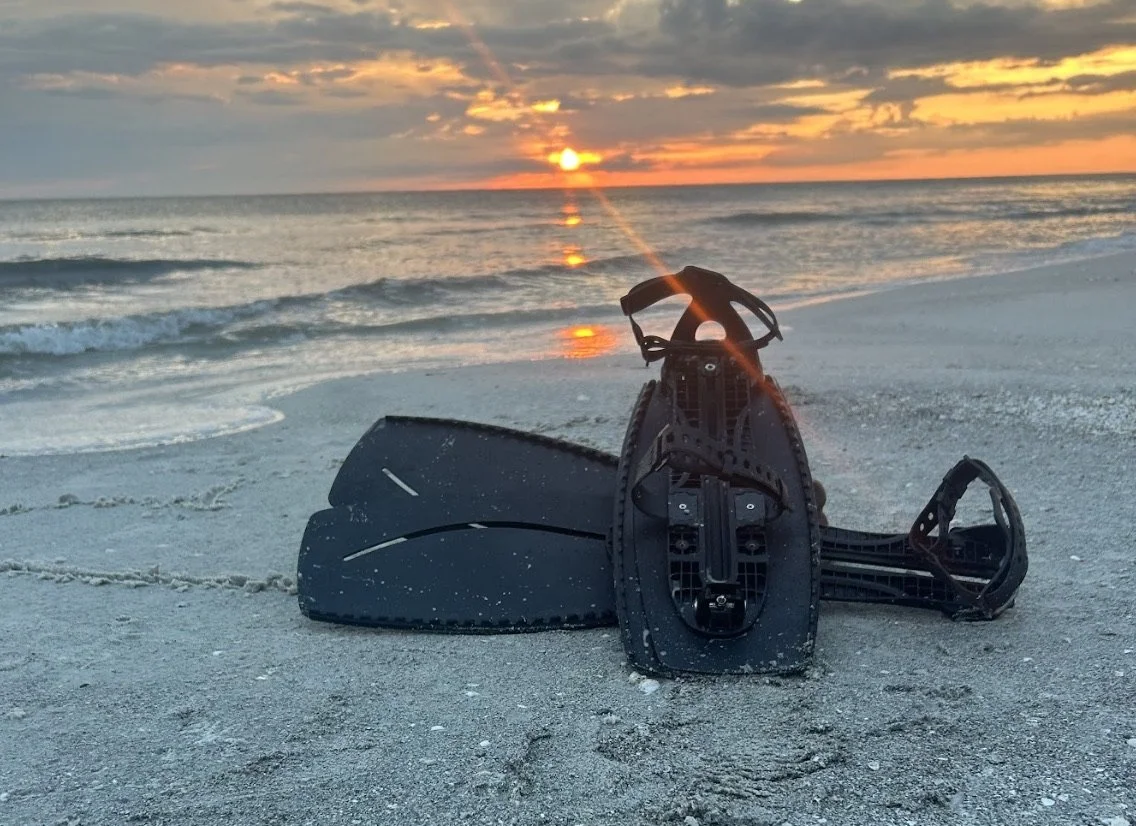
Category claims must be seen in motion. Watch SALT AMS deploy for propulsion, retract for mobility, and remain with the user as depth, footing, and terrain change.
End the Fin Penalty.
SALT AMS—the Sea Air Land Transition Amphibious Mobility System—is built for movement across changing environments.
Traditional fins are powerful when you are swimming. They become the penalty when the environment changes.
SALT AMS gives users water propulsion and mobility outside active swimming across watercraft, shoreline, current, decks, confined spaces, variable-depth water, and terrain.
Deploy for propulsion. Retract for mobility. Keep moving.
Built for Sea · Air · Land · Transition
Designed to Reduce Gear Handling
Evaluate SALT AMS Where Conventional Fins Become the Penalty
Tell us the mission set, environment, footwear, and transition problem. Phibian Gear will help define a relevant evaluation path.
CATEGORY PROBLEM
The Fin Penalty
Fins are necessary.
That is why they survived.
But traditional fins were built around one assumption: the user is swimming.
Real missions, rescues, jobs, research operations, and outdoor pursuits are not single-mode swimming problems. They are traversal problems. Users move through aircraft, vessels, docks, ramps, surf, current, mud, rock, shoreline, decks, confined spaces, and changing water depth.
That is where the fin becomes the penalty.
The Fin Penalty is the time, energy, handling, clutter, delay, and mobility loss users accept when they need propulsion in the water but mobility everywhere else.
SALT AMS was built to end that penalty.

CATEGORY SOLUTION
From Fin to Amphibious Mobility System
SALT AMS modernizes one of the last unchanged pieces of required marine kit.
It is not a single-purpose swim accessory. It is a deployable, retractable movement system for users who operate across sea, air, land, watercraft, shoreline, current, bottom contact, and variable terrain.
Traditional fins ask the user to compromise.
Use me in the water.
Fight me everywhere else.
SALT AMS changes the operating model.
Fins when you need propulsion.
Mobility when you do not.
Field demonstration: SALT AMS and conventional fins across an over-the-beach transition. See the difference in swimming, shoreline movement, and gear handling as the environment changes.
SYSTEM OPERATION
Deploy. Swim. Retract. Move.
SALT AMS gives users a simple operating sequence for complex environments.
01
Deploy
Extend the blade when swim propulsion is needed.
02
Swim
Move through the water with fin-driven propulsion when active swimming is the right movement mode.
03
Retract
Retract the blade when the environment changes, depth shifts, or the user needs mobility outside active swimming.
04
Move
Continue across shoreline, deck, dock, ramp, rocks, mud, vessel, terrain, or mission objective without stopping to fight your gear.
One system. Four operating modes. Continuous movement across the transition zone.
VIDEO PROOF
See the System Transition
Watch SALT AMS extend for propulsion and retract for mobility — reducing the need to remove, carry, or stow fins when the environment changes.
HUMAN PERFORMANCE
More Ways to Move
The strongest movement system is not the one that forces every problem into swimming.
SALT AMS expands the user’s movement options across variable-depth water, bottom contact, current, shoreline, vessels, and terrain. When swimming stops being efficient, the user can stand, stride, push off the bottom, manage current, and continue moving without removing the system.
Swim when it makes sense.
Stride when it is faster.
Push off when the bottom is the advantage.
Use the current.
Keep moving.
VARIABLE-DEPTH ADVANTAGE
Built for the Water Between Swimming and Walking
Chest-to-knee-deep water exposes the weakness of legacy fins.
It can be too shallow for efficient swimming, too deep or unstable for normal walking, and too dynamic for constant gear removal. SALT AMS gives the user an adaptive movement mode between those extremes.
With the blade retracted, the user can use bottom contact, toe leverage, longer controlled strides, current management, and push-off movement while keeping propulsion capability available when needed.
SALT AMS Transition in Swift Water-Adventure Outdoors
SAFETY MARGIN
Mobility Across Changing Marine Environments
Marine environments demand movement options that adapt as water, terrain, current, depth, footing, and transition points change.
SALT AMS should be evaluated as amphibious mobility equipment for users operating where water and terrain intersect.
It does not replace judgment, training, PPE, or established safety procedures. Teams should assess it within their own mission requirements and operating protocols.
LOADOUT EFFICIENCY
A Capability You Can Wear Into the Problem
Conventional fins are long, awkward, and difficult to manage outside active swimming. They create burden in aircraft, vehicles, boats, RHIBs, decks, docks, ramps, tight storage, confined spaces, and field kits.
SALT AMS reduces the need to remove, carry, stage, stow, recover, and reattach fins as conditions change.
Less gear-handling.
Less delay.
Less clutter.
More movement.
SALT AMS - Military Freefall Combat Swimmer Open Sea Splash-Department of War
MISSION SETS
Different Mission Sets. Same Penalty. One System.
SALT AMS serves users whose work, rescue, research, and adventure do not stop at the waterline.
DOW
Sea-air-land traversal for users operating under load, stress, space constraints, and transition pressure.
SAR
Propulsion in the water and mobility across surf, floodwater, ramps, debris, shoreline, current, and rescue terrain.
Hard Hat
Reduced gear-handling and better mobility across commercial dive, deck, dock, vessel, ramp, and marine jobsite environments.
Adventure
Water propulsion without turning every beach, boat, rock, dock, or trail transition into a fin-management problem.
Research
Efficient movement between swim, wade, walk, sample, survey, vessel, shoreline, and field task modes.
SALT AMS serves users whose work, rescue, research, and adventure do not stop at the waterline.
Traditional fins solve one part of the movement chain. SALT AMS supports the full transition path: deploy for propulsion, retract for mobility, and continue moving when the environment changes.
CATEGORY PROOF
The Last Piece of Marine Kit to Modernize
Every critical piece of marine, defense, rescue, industrial, research, and outdoor kit has evolved. Communications. PPE. Load carriage. Navigation. Footwear. Materials. Mission planning.
The fin did not.
SALT AMS changes that by turning a legacy propulsion accessory into a modern amphibious movement system.
Deploy for propulsion. Retract for mobility.
Built for sea · air · land · transition.
Designed to reduce fin removal, carrying, stowing, and gear-handling.
U.S. Patented · Universal Fit: U.S. sizes 6–15 · Made & Manufactured in the USA
Origin of Phibian Gear
Anora Bellator: The Phibian Gear Identity
Anora Bellator is the sole approved Phibian Gear identity mark—a symbol of adaptability across sea, air, land, and the transition zones where movement requirements change.
NEXT STEP
Evaluate SALT AMS Where Fins Become the Penalty
The best way to understand SALT AMS is to test it in the exact transition environment where conventional fins create delay, clutter, fatigue, handling burden, or mobility loss.
Request an evaluation by mission set.
FAQ - Frequently Asked Questions
-
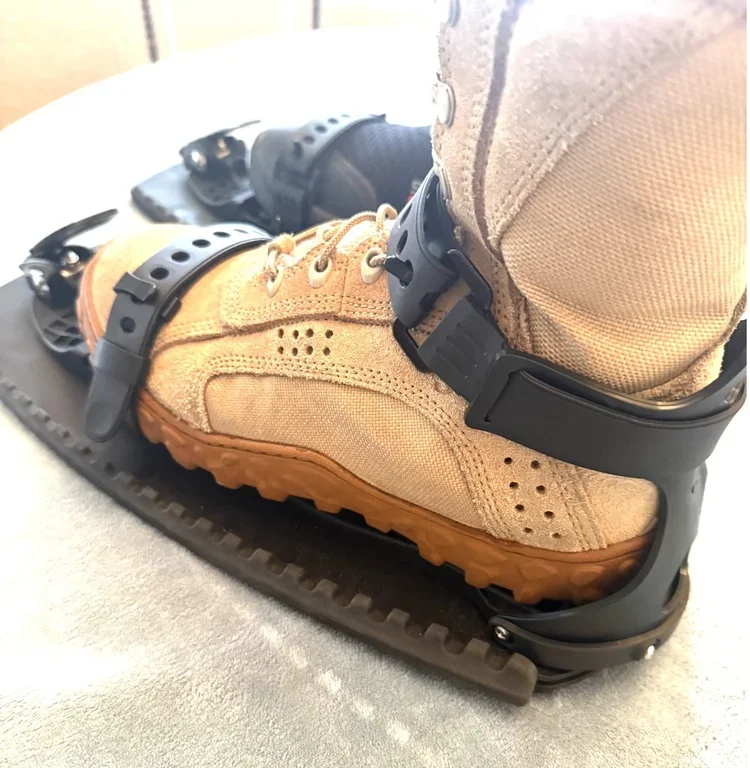
The SALT Amphibious Mobility System (SALT AMS) is a U.S. patented retractable fin platform built by Phibian Gear for sea-air-land transition. Deploy the blade for swim propulsion in the water; retract the blade for walkable mobility across shoreline, boat decks, docks, ramps, surf zones, and terrain — without stopping to remove, carry, or stow conventional fins.
-
Traditional fins are built around one assumption: the user is swimming. They become a penalty the moment the environment changes — creating gear-handling, delay, and mobility loss on land, decks, and in confined spaces. SALT AMS is a full mobility system, not a single-purpose swim accessory.
-
SALT AMS offers universal fitment across U.S. sizes 6–15 in a single system.
-
SALT AMS is designed to work with a wide range of high-top footwear, including combat boots, tactical footwear, dive booties, and canvas high-tops.
-
SALT AMS is available direct from Phibian Gear at $499 per pair (launch offer; regularly $599), with free continental U.S. shipping using code SALTSHIP at checkout.
-
Yes. Phibian Gear supports military, agency, first responder, research, and commercial evaluations. Submit a request through the Request Evaluation page.
The best way to understand SALT AMS is to test it in the environment where conventional fins create delay, clutter, handling, fatigue, or mobility loss. Request an evaluation by mission set.